

Morning and evening routines for children: less reminding, more doing it themselves
«Have you brushed your teeth? Where's your school bag?» If you ask that every morning, you know the problem. A routine with pictures shows children themselves what comes next. Here you'll find examples, tips and a template to print – also for children who can't read yet.
Why routines help children
Children feel safer when they know what comes next. A fixed sequence takes decisions off their plate – your child doesn't have to think it through every morning, and you have to remind less. Over time children do the steps on their own, and that makes them proud.
Visible routines are especially helpful for children who find transitions hard or are easily distracted, for example with ADHD or autism. One picture per step replaces many words. More about structure in everyday life
Examples for morning and evening
Four to seven steps are enough. Adapt the examples to your child – you can tap them in the template below.
🌅 Morning routine
- Get up
- Toilet and wash hands
- Get dressed
- Breakfast
- Brush teeth
- Brush hair
- Shoes and jacket
- School bag
🌙 Evening routine
- Tidy up toys
- Clear the table
- Shower
- Put on pyjamas
- Brush teeth
- Lay out clothes
- Pack school bag
- Read
- Lights out
☀️ After school
- Wash hands
- Afternoon snack
- Homework
- Play outside
- Drink water
5 tips to make the routine work
- Decide together. Your child may help choose the order of the steps – and pick the pictures.
- Always the same order. The power of a routine lies in repetition. After two or three weeks a lot runs by itself.
- Hang it where it's seen. The morning routine in the hallway or by the sink, the evening routine in the child's room – at your child's eye level.
- Allow enough time. Rushing ruins any routine. Better get up ten minutes earlier and prepare in the evening.
- Praise what works. A tick or a star per day shows progress. If it doesn't work one day: tomorrow is a new day.
Routine template with pictures to print
Type in a name, tap the steps, print: one routine per landscape A4 sheet, with big pictures and boxes to tick for each day. Free, no account. Your entries stay on this device and are not sent anywhere.
Preview
Routine app: less reminding in the morning, more doing it themselves.
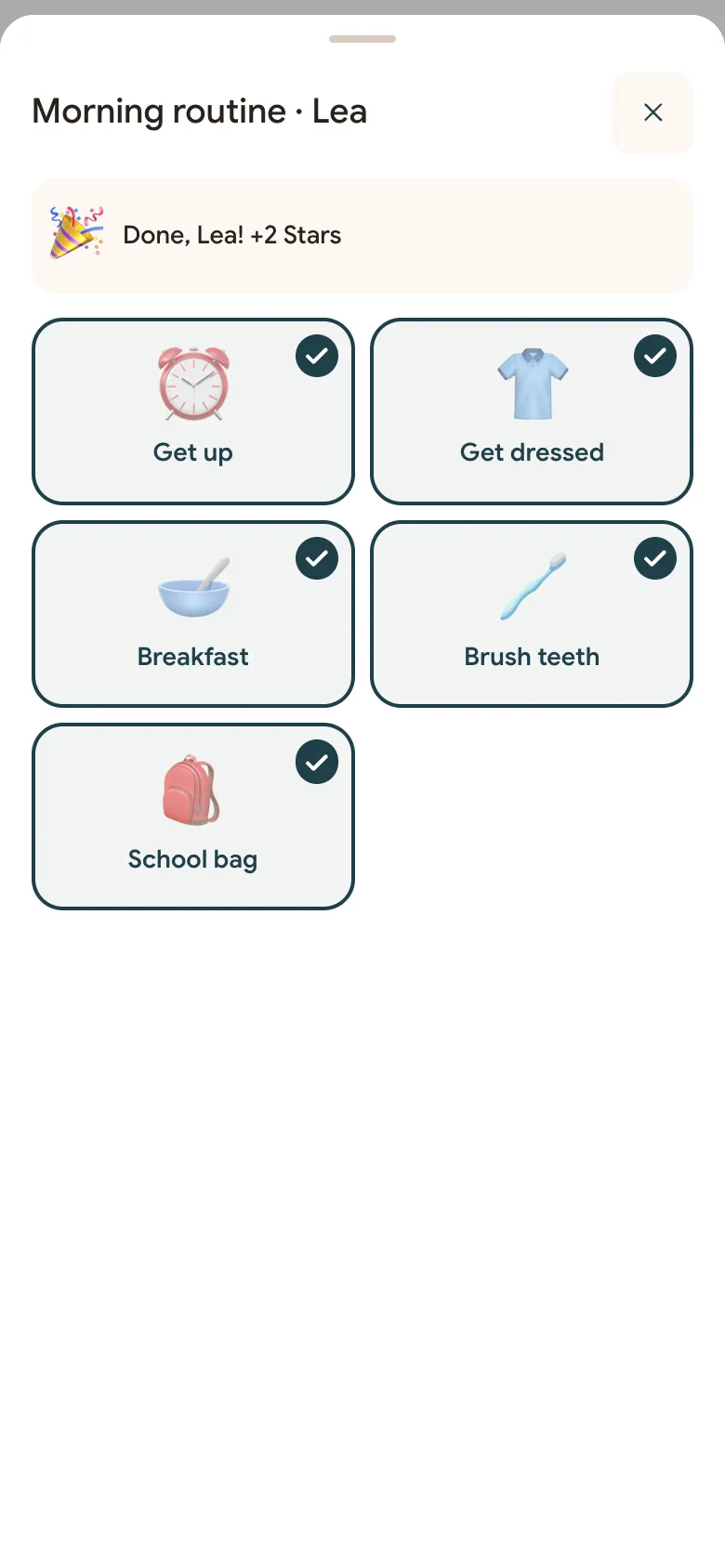
In FamilyBuddy your child taps the steps of their routine themselves – on the family tablet or their own device, with a code and PIN instead of an email address.
- Templates for morning and evening routines or your own steps with matching pictures
- Set per child and weekday, visible on «Today»
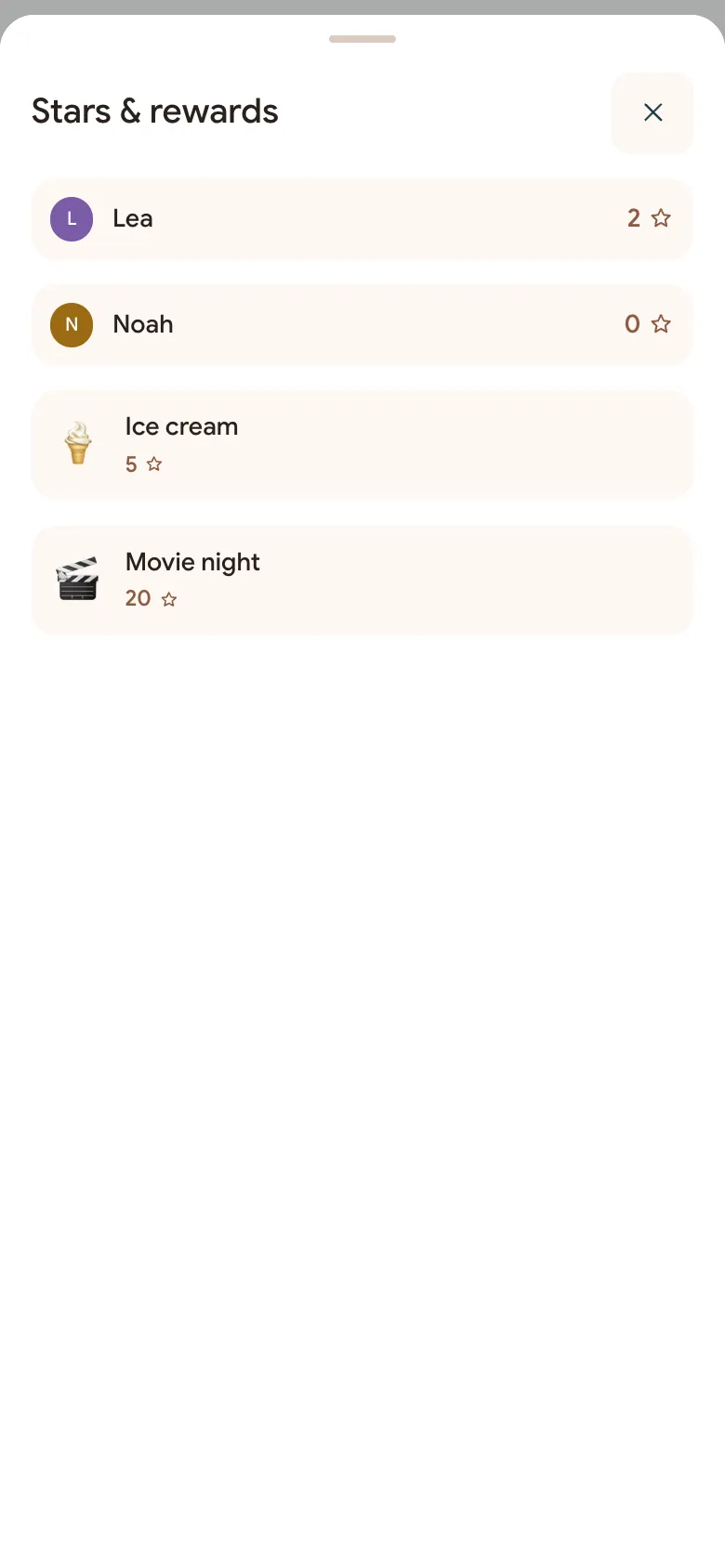
- Stars for finished routines, to swap for rewards that you decide
- In wall mode on the kitchen tablet – without your child needing their own phone
- Routine plan to print: one card per child with boxes for each day
CHF 5 per month for the whole family, data in Switzerland. More on the home page · Guide to routines · Chore chart for children
Frequently asked questions about routines for children
From what age does a picture routine help?
Children from about three can follow a sequence of pictures. For kindergarten and early primary school children it is often ideal. Older children need fewer pictures but appreciate a checklist.
How many steps should a routine have?
Four to seven. Too many steps are overwhelming, too few give no orientation. Better start with a few and add more later.
What if my child won't join in?
Ask what is difficult: the order, a particular step, not enough time? Let your child have a say and accompany them for the first few days. Pressure and punishment turn a routine into a battle.
Do routines help with ADHD or autism?
Many families find that visible routines with pictures make everyday life calmer, because the child can see for themselves what comes next. A routine does not replace an assessment or therapy, though. You'll find places to turn to in our help.
Should there be a reward?
A tick or a star per day is often enough. If you like, collected stars can be swapped for small treats, such as an extra bedtime story or an outing.
Is the template free and do I need an account?
Yes, the template is free and needs no account. Your entries stay on your device only and are not sent anywhere. If you'd like your child to tap the steps on the tablet and collect stars, you can try FamilyBuddy free for a month.
Is there a routine app for children?
Yes. In the family app FamilyBuddy children tap the steps of their morning and evening routine themselves, with pictures instead of text – on the family tablet or their own device, with a code and PIN instead of an email address. The app runs in the browser on iPhone, Android, tablet and computer – no download from the App Store. The first month is free. Try for free